We are the People. Act of self-determination. Discrimination monitoring
European Union: Complicity in an Interethnic Conflict or Forced Assimilation into the Russian Federation?
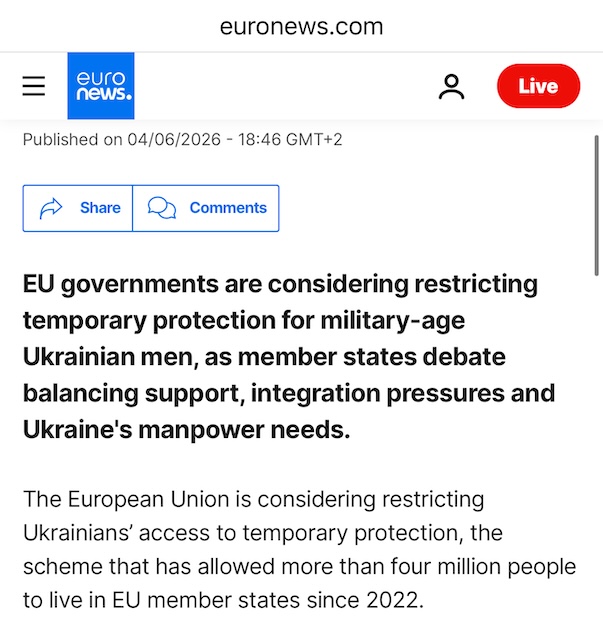
The current campaign in the European Union to return Ukrainian men of conscription age is not migration policy — it is an institutional attempt at complicity in ethnic cleansing. Because representatives of national minorities of Ukraine are able to obtain legal status in the countries of their ethnic origin, the practical effect of this political campaign falls solely on ethnic Ukrainians.
This indicates that ethnic Ukrainians themselves are the focus of these measures, especially given that the existence of ethnic Ukrainians as a distinct national group is not even recognized not only by Russia, but even by Ukraine itself.
We, as representatives of the Ukrainian ethnic community, sincerely hope that all of these questions and concerns will be carefully considered before any decision is made. ... Read more ⇢
Czech Republic: Institutional Political Agitation and Incitement of Interethnic Hostility Against Ukrainians

Tomio Okamura is a Czech politician and leader of the Freedom and Direct Democracy party (SPD) - said:
"Dear ladies and gentlemen, I have a hot update for you.
Our government is intensively negotiating in the European Union about the possibility of ending the so-called temporary protection in the Czech Republic for all Ukrainian men of productive age. Because, as you know, the granting of the so-called temporary protection for Ukrainians is a regulation from Brussels.
I would most like to end all of it immediately, for all Ukrainians, because they regularly go to Ukraine on vacation anyway, but Brussels does not want to allow us to do that, so even if we ended it, all Ukrainians would remain here because under EU rules they are allowed to stay here.
We therefore really must intensively strive for the end of the war in Ukraine, because that would automatically end the so-called temporary protection for all Ukrainians in the Czech Republic and they would have to return home or they would have to apply for a standard residence permit. ... Read more ⇢
Germany: The Revival of Fascism Through Legal Segregation — Incitement to Forced Return and the Abuse of Temporary Protection for Ukrainians
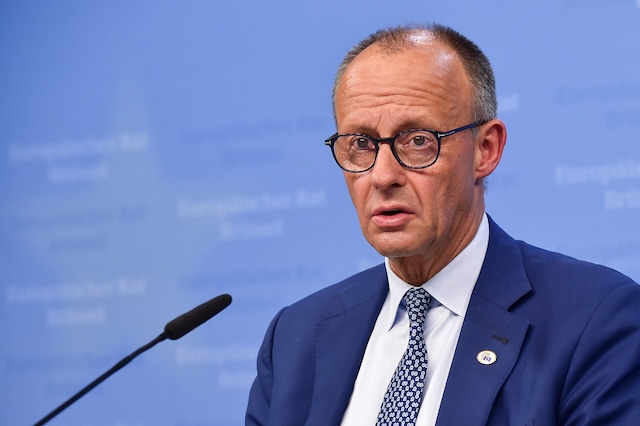
German Chancellor, Friedrich Merz (Wikimedia Commons)
In Germany, Ukrainians are publicly singled out as a collective “problem” whose movement, presence, and access to protection must be restricted, controlled, or redirected in accordance with political and military objectives. Senior officials openly condition rights, threaten withdrawal of protection, and demand the retention of Ukrainians — particularly men — not as individuals, but as a group defined by presumed “duty” and utility.
Statements by the German Chancellor, Friedrich Merz, introduce a logic that is historically unmistakable. A population is framed as a “question” to be solved, subjected to exceptional measures, and reduced from subjects of law to objects of state management. Structurally, this reasoning strongly echoes the doctrine art ... Read more ⇢
Why Ukrainians Are Not Granted Refugee Status
Although temporary protection was originally designed as an emergency response to mass displacement, its implementation in the case of Ukrainians has resulted in a separate legal track — one that avoids the full recognition, obligations, and legal procedures associated with refugee status.
This could have been resolved through a single directive, using the same mechanism that introduced temporary protection, but aimed at simplifying access to refugee status.
In reality, however, Ukrainians are granted this status only in rare, exceptional cases.
Instead, the system is set up in such a way that applying for refugee status becomes so difficult, slow, and overwhelming that most people give up and accept temporary protection by default — often without even realizing they had another option.
The key difference between temporary protection and refugee status lies in the amount of information required for mandatory collection. To obtain full refugee status, one must not only verify their identity — in most cases, a passport is sufficient — but also provide ethnic ... Read more ⇢
"Safe Regions" of Ukraine as a New Form of Fascist Practice
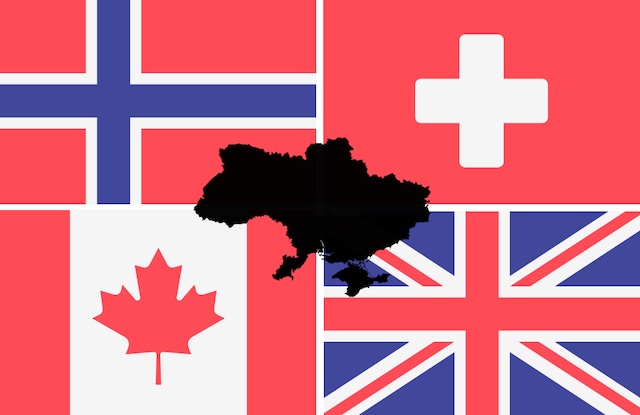
The policy of denying asylum to Ukrainian refugees under the pretext of “safe regions” in Ukraine ominously echoes the Nazi practice of the 1930s–1940s, when the fiction of “organized ghettos” and “reservations” justified the segregation, deportation, and extermination of Jewish populations. Ghettos like those in Warsaw or Łódź were presented as “safe” zones under Nazi control but served as instruments of isolation, repression, and preparation for the “Final Solution.” Neutral countries such as Switzerland were complicit, refusing Jewish refugees entry under formal pretexts, thereby legitimizing Nazi crimes.
Today, Norway, the United Kingdom, Switzerland, and Canada, by invoking the concept of “safe regions,” ignore the legal vacuum created by derogation and internal apartheid in Ukraine. This policy turns refugees from war victims into “voluntarily returned persons,” absolving states of responsibility for their fate. ... Read more ⇢
What is Derogation — Protection from Expulsion, Deportation, and a basis for Asylum
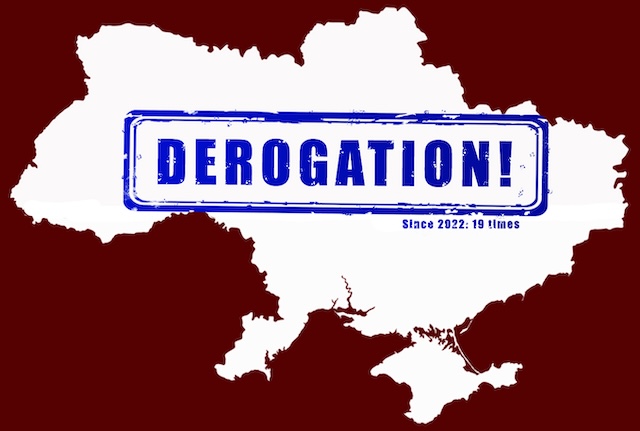
1. Derogation in International Law
Derogation is an official legal term that refers to the temporary suspension by a state of its obligations to protect human rights. It is applied in situations of war, a state of emergency, mass unrest, or another exceptional threat to the life of the nation. When a state declares a derogation, it notifies international organizations — such as the Council of Europe or the United Nations — that it is unable to fully comply with the rights enshrined, for example, in the European Convention on Human Rights (ECHR) or the International Covenant on Civil and Political Rights (ICCPR).
Such a suspension is regulated by:
• Article 15 of the European Convention on Human Rights (ECHR)
• Article 4 of the International Covenant on Civil and Political Rights (ICCPR)
... Read more ⇢
Legal justification of discrimination against Ukrainians through the Temporary Protection mechanism

v.9.2 - to be updated...
1. Introduction
Ukrainians displaced by the war have not been granted refugee status under the 1951 Refugee Convention. Instead, they are placed under temporary protection frameworks, which lack long-term guarantees and legal security.
Although widely referred to as “refugees” in public discourse, their status does not legally qualify as such. They remain in alegal gray zone, where they are denied the full protections afforded by international refugee law.
1.1. Governments apply selective legal reasoning to justify this approach:
• When addressing legal obligations, they avoid classifying Ukrainians as refugees under the 1951 Refugee Convention, instead framing temporary protection as an emergency measure due to the unprecedented number of arrivals.
& ... Read more ⇢
Germany: The Unlawfulness of the Extradition of a Ukrainian Citizen Due to National and Gender-Based Discrimination
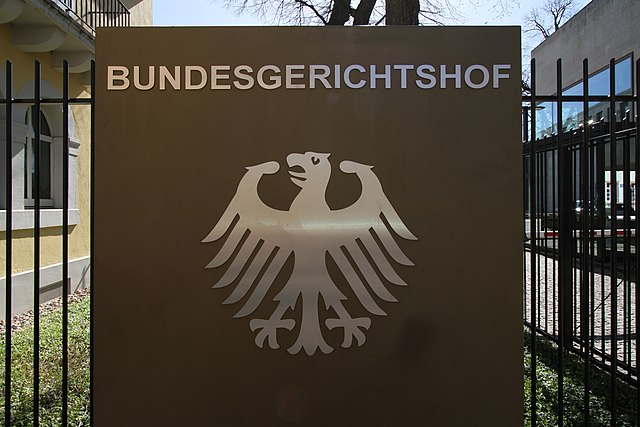
Photo by Gerd Eichmann, CC BY 4.0, via Wikimedia Commons.
The decision of the Federal Court of Germany (BGH) on January 16, 2025, permitting the extradition of a Ukrainian citizen despite his conscientious objection to military service, constitutes a clear case of national and gender-based discrimination. This decision violates international legal norms, particularly Article 14 of the European Convention on Human Rights (ECHR) and Article 26 of the International Covenant on Civil and Political Rights (ICCPR), both of which prohibit discrimination based on nationality and gender. Furthermore, the risk of forced conscription upon extradition raises serious concerns under Article 3 of the ECHR, which prohibits torture and inhuman or degrading treatment. ... Read more ⇢
Germany: Ukrainian refugees demand Alexander Dobrindt face trial for his discriminatory remarks and incitement of hatred
 Photo by CSU-Landesleitung, CC BY-SA 3.0 DE, via Wikimedia Commons
Regarding the statements made by Alexander Dobrindt, head of the Christian Social Union (CSU) parliamentary group in the Bundestag, during an interview with Bild am Sonntag on June 23, 2024, it has been established that these statements contain elements of discrimination against Ukrainian refugees, violating their rights to protection and support in accordance with international law, national law, and the criminal law of Germany.
Factual Background
In his statement, Alexander Dobrindt proposed sending Ukrainian refugees back to their home country if they fail to find employment in Germany, despite the ongoing military conflict in Ukraine. He also criticized the payment of welfare benefits to refugees, claiming that guaranteed benefits slow down their job-seeking efforts.
This statement triggered sharp criticism ... Read more ⇢
The Silent Hunt on Ukrainians - A Crisis of Discrimination in the EU
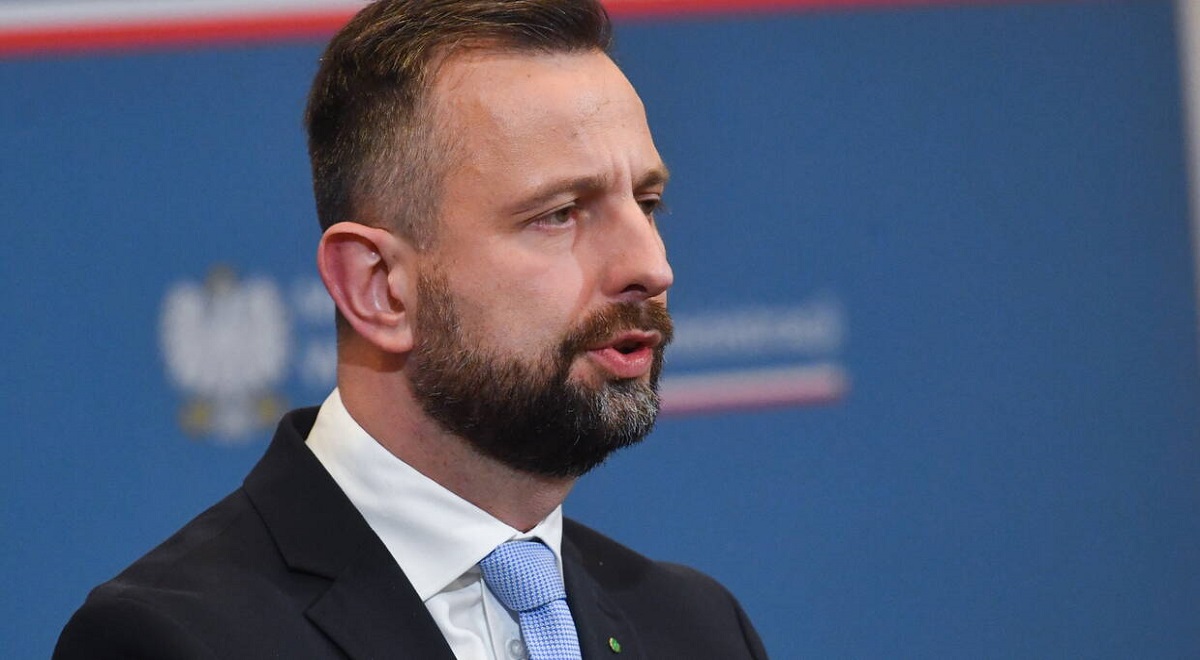
Władysław Kosiniak-Kamysz.
Photo: PAP/Piotr Nowak - the Deputy Prime Minister of Poland and the Minister of National Defence
It is crucial to acknowledge the differential treatment between various national groups. Notably, while Poland and Lithuania have pledged to assist in the repatriation of Ukrainian men subject to military draft, thereby recognizing their vulnerable status, the broader policies enacted by the EU fail to protect these same individuals under the established norms of international refugee law. This selective enforcement contravenes Article 14 of the Universal Declaration of Human Rights, which guarantees the right to seek and enjoy asylum from persecution, as well as the non-refoulement principle enshrined in the 1951 Refugee Convention.
Moreover, the contrasting responses of the European Union to the restrictive measures ... Read more ⇢
Slovakia: Refugees subject to conscription laws should go to Ukraine to fight - Robert Kaliňák

Photo: Jaroslav Novák/TASR
Refugees subject to Ukrainian conscription laws should go to fight in Ukraine. Slovak Defense Minister Robert Kaliňák said this in the V politike talk show. According to the head of defense, there is no need to send NATO soldiers to the territory of Ukraine.
"Of all the refugees we are protecting, (…) there is a group that corresponds to the Ukrainian conscription law," Kaliňák said in the talk show, saying that he thinks it is "the biggest help to the Ukrainian army if it has enough people."
Source:standard.sk
A potential legal violations in the statement suggesting that Ukrainian refugees subject to Ukraine’s conscription laws should participate in military efforts, it would include the following points:
1. ... Read more ⇢
Poland: General Skrzypczak talks about help in "deporting Ukrainians" from Poland
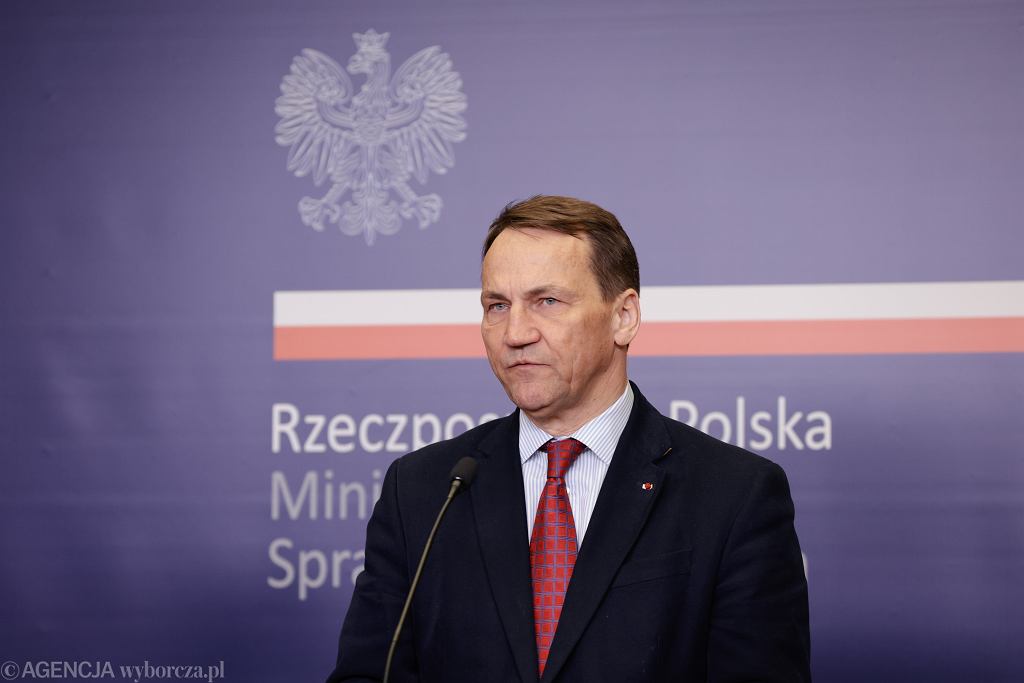 Photo. Dawid Żuchowicz / Agencja Wyborcza.pl
"The Polish government should help Kiev in the deportation of Ukrainians who are in exile - said General Waldemar Skrzypczak. The Ministry of Foreign Affairs referred to this idea. "We are considering how we can support the Ukrainian side" - said the Ministry of Foreign Affairs..."
Source: gazeta.pl
General Waldemar Skrzypczak’s statements suggesting that the Polish government should assist in the deportation of Ukrainian refugees potentially violates the principle of non-refoulement, which is a fundamental aspect of international refugee law as established by the 1951 Refugee Convention and its 1967 Protocol. This principle strictly prohibits the forced return of refugees t ... Read more ⇢
Estonia: Member of the European Jaak Madison called Ukrainian refugees cowards
On MEP Jaak Madison egregiously slandered Ukrainian refugees during a European Parliament session, labeling them as “cowards” for seeking sanctuary from mobilization and baselessly accusing them of violating Ukrainian law.
Such statements not only exhibit a profound disrespect for the individuals fleeing conflict but also represent a flagrant violation of international and European Union legal standards governing the treatment and rights of refugees:
1. Geneva Convention on Refugees:His derogatory characterization of refugees directly undermines the fundamental tenets of the 1951 Refugee Convention and its 1967 Protocol, which mandate the protection and humane treatment of individuals fleeing persecution. His remarks are an affront to the very essence of international refugee law.
2. Dublin Regulation of the European Union:
By disparaging refugees, Mr. Madison shows a blatant disregard for the EU’s structured process under the Dublin Regulation, which ensures the dignified and fair handling of asylum applications within the EU. ... Read more ⇢